OUR THEORY OF CHANGE
Transforming Schools into Digital Excellence Hubs.
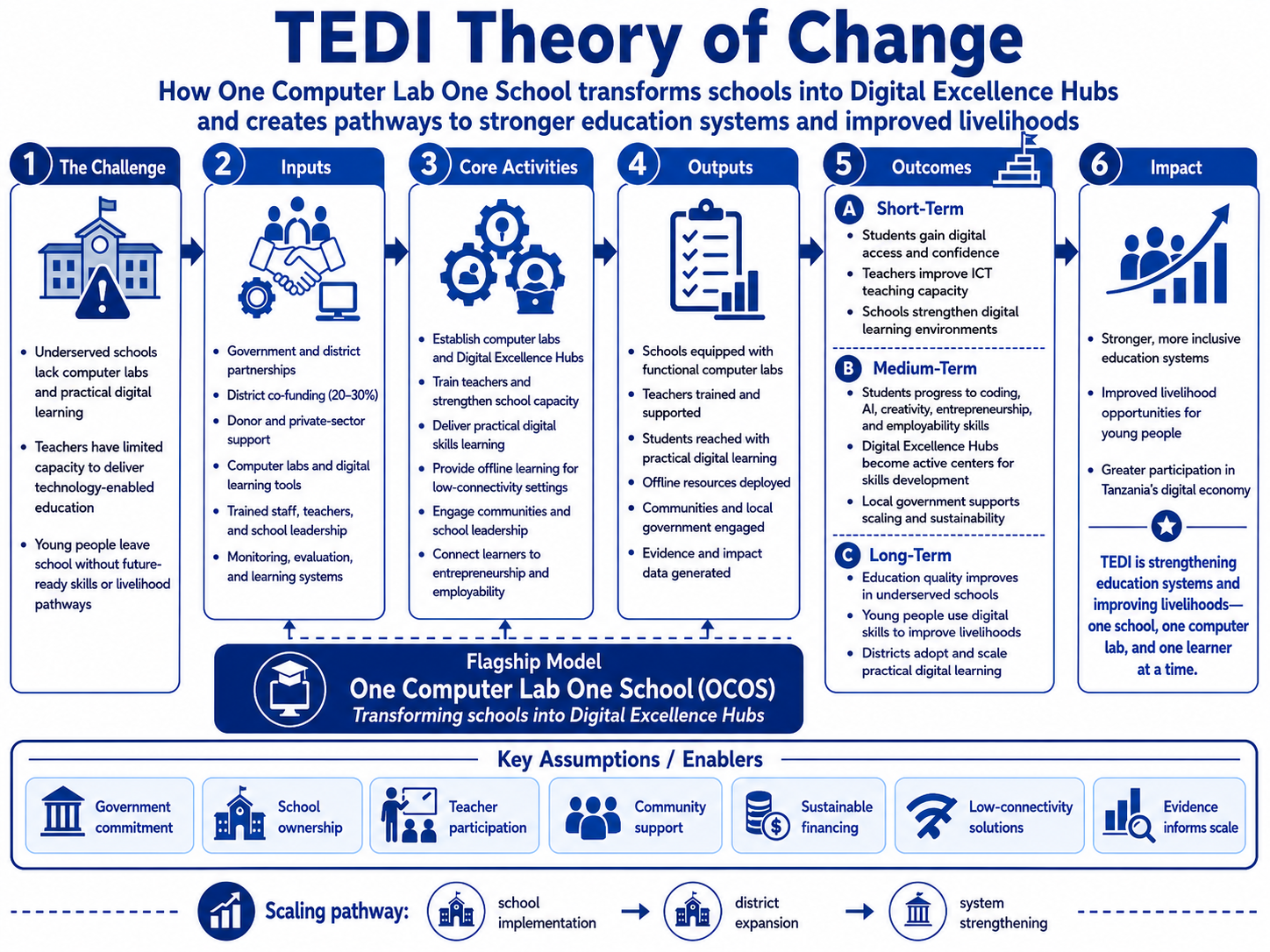
Our theory of change shows how One Computer Lab One School model strengthens education systems and creates pathways to better livelihoods for young people. One school, one computer lab, and one learner at a time.
The Challenge We Address
Many young people in underserved communities complete school without regular access to computers, practical digital learning, trained teachers, or clear pathways into employability and entrepreneurship.
At the same time, many public schools lack the infrastructure and capacity needed to prepare learners for a digital economy. This creates a gap between what students learn in school and the skills they need to improve their livelihoods, create solutions, and participate meaningfully in Tanzania’s future economy.
Our Response
TEDI responds through One Computer Lab One School, our flagship school transformation model.
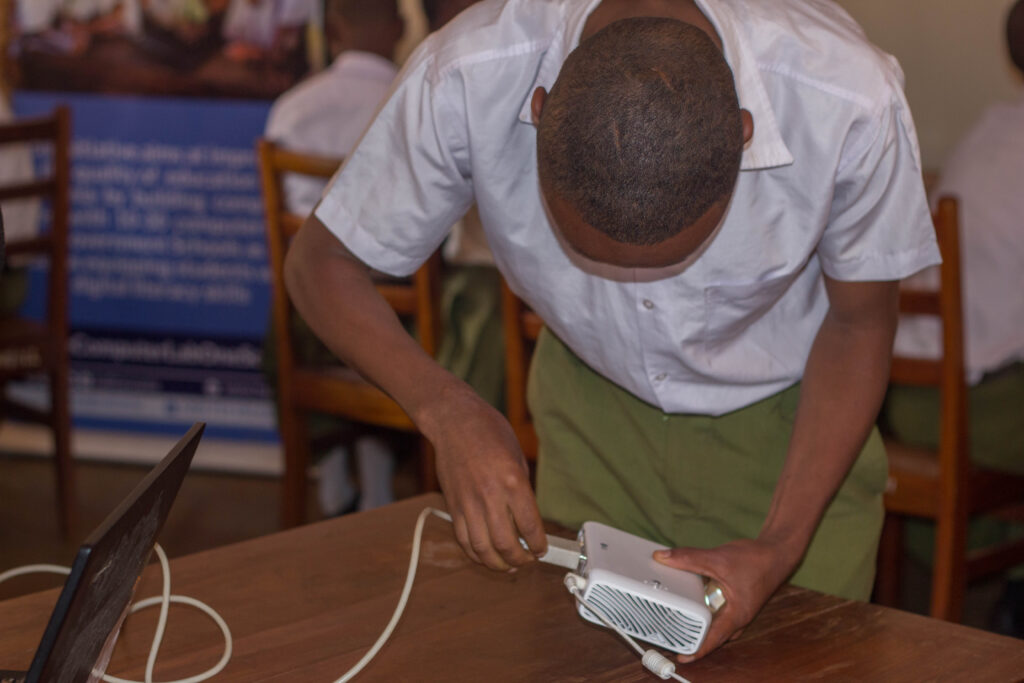
Through this model, we establish computer labs and transform them into Digital Excellence Hubs. These hubs provide students with access to practical digital learning while strengthening the capacity of teachers, schools, and local education systems.
Our approach brings together computer lab infrastructure, teacher training, offline learning resources, community engagement, monitoring and evaluation, and government partnership. This ensures that digital learning is not treated as a short-term project, but as part of a sustainable education transformation pathway.
How Change Happens
TEDI’s model works through a clear pathway:
01
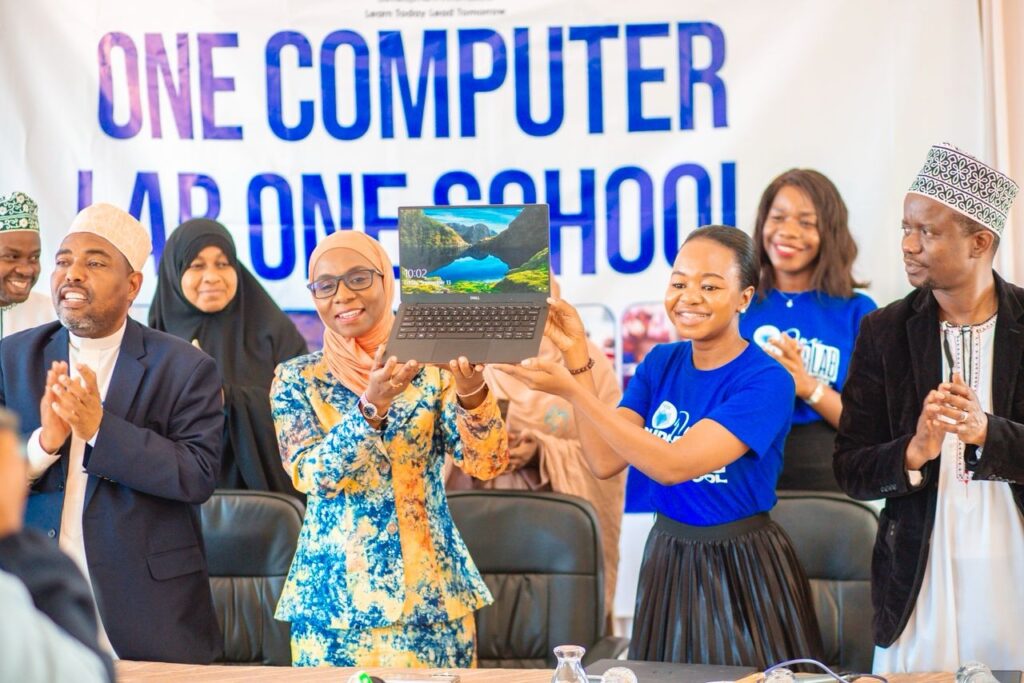
First, we partner with government, districts, schools, donors, and the private sector to create the conditions for scale and sustainability.
02
Next, we establish computer labs, train teachers, provide practical digital learning resources, and support schools to use the labs as active Digital Excellence Hubs.
03
As students engage with these hubs, they gain digital confidence, foundational computer skills, creativity, coding exposure, entrepreneurship skills, employability readiness, and problem-solving abilities.
04
Over time, schools become stronger learning environments, teachers become more confident in delivering technology-enabled education, and young people become better prepared to use digital skills to improve their livelihoods.
Scaling Through Government Partnership
TEDI’s long-term vision is to scale practical digital learning through strong partnership with government.
Our model is designed to move from school-level implementation to district-wide expansion and, eventually, system-level strengthening. Local government co-funding (20%-30%) plays a key role in this process by creating ownership and shared investment in the future of public education.
By working with government, schools, communities, donors, and private-sector partners, TEDI aims to make Digital Excellence Hubs a scalable and sustainable pathway for improving education and livelihood opportunities across Tanzania.
The Change We Want to See
TEDI contributes to a future where underserved schools are equipped to deliver practical, future-ready education and young people are empowered to use digital skills for learning, work, enterprise, and community problem-solving.
Our desired impact is a stronger and more inclusive education system where young people have the skills, confidence, and opportunities to participate in Tanzania’s growing digital economy.
TEDI is strengthening education systems and improving livelihoods one school, one computer lab, and one learner at a time.
Work With Us
Scaling this change requires partnership. We welcome collaboration with governments, donors, communities, schools, and private-sector partners who share our commitment to practical digital learning, education system strengthening, and improved livelihood opportunities for young people.